
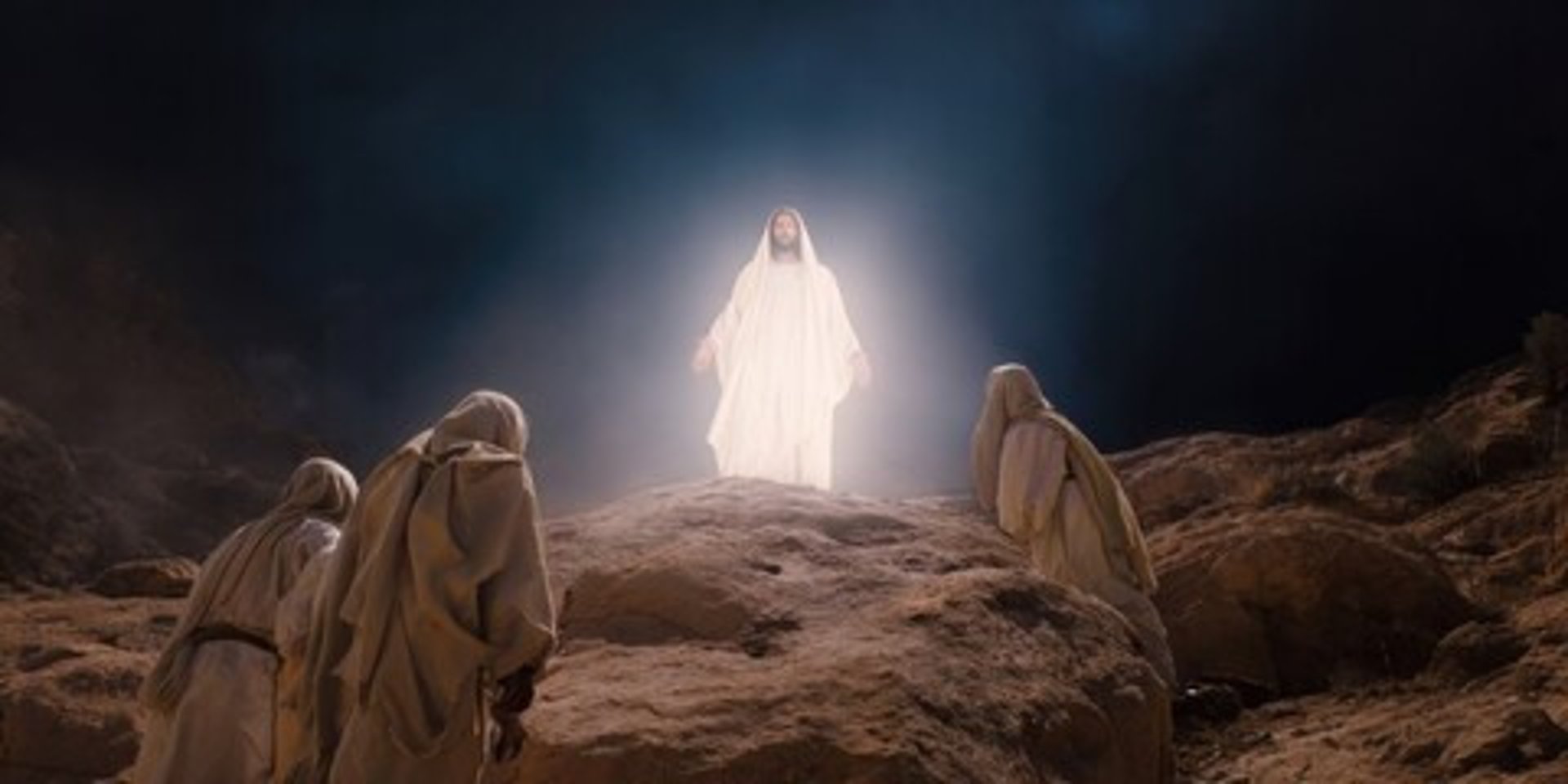
WEEK THREE
Examine the historical evidence for Jesus' resurrection—the empty tomb, eyewitness accounts, and transformed lives—and why this event is the heart of faith.
BY B. GIRON JR.
12/230/2025
Did Jesus Really Rise From the Dead
Hey there! Welcome back. Last week, we looked at who Jesus is His claims, His miracles, and His unique place in history. But today, we’re getting into the "make or break" moment of Christianity.
If you’ve ever wondered why Christians make such a big deal about Easter, or why this one event is so central, you’re in the right place. We’re going to look at the evidence for the Resurrection
Why Does This Even Matter?
You might think, "Can’t I just follow Jesus’ teachings and skip the supernatural stuff?" Well, according to the Bible, the answer is actually no.
The Apostle Paul was very blunt about this in 1 Corinthians 15:14: "And if Christ has not been raised, our preaching is useless and so is your faith."
Basically, if Jesus is still in a grave somewhere, the whole thing falls apart. But if He did rise, it proves He is exactly who He said He was. It’s also the key to our own hope. Romans 10:9 says that believing in your heart that God raised Him from the dead is a core part of how we are saved. So, let’s look at the facts.
Step 1: Did Jesus Actually Die?
Before you can have a resurrection, you have to have a death. Some people have suggested the "Swoon Theory" the idea that Jesus just fainted and woke up in the cool air of the tomb. But the evidence says otherwise:
The Verdict of Professionals: The Roman soldiers were experts at execution. They didn't break Jesus’ legs to speed up death because they saw He was already gone (John 19:33).
The Physical Evidence: To be absolutely sure, a soldier pierced Jesus’ side with a spear, and "blood and water" flowed out (John 19:34). Modern medicine tells us this happens when the heart fails after extreme physical trauma.
The Burial: Jesus was wrapped in about 75 to 100 pounds of burial spices and linens (John 19:39-40). No one survives that if they are just "fainting."
Step 2: What Happened to the Tomb?
We know Jesus was buried in a tomb cut out of rock, with a massive stone rolled in front of the entrance (Mark 15:46).
The religious leaders were so worried Jesus’ disciples might try to steal the body that they asked Pilate for a "Roman Guard" a unit of highly trained soldiers to watch the tomb. They even put an official Roman seal on the stone (Matthew 27:62-66).
Yet, on Sunday morning, the tomb was empty. All four Gospels agree on this. If the body were still there, the Roman or Jewish authorities could have just produced it to shut down the early church immediately. They never did.
Step 3: Did People Actually See Him?
An empty tomb is one thing, but eyewitnesses are another. Jesus didn't just appear as a "ghost" or a "vision." He appeared physically:
To the Women: Mary Magdalene and others were the first to see Him (Matthew 28:9). In that culture, a woman’s testimony wasn't usually accepted in court so if you were making this story up, you wouldn't have made them the primary witnesses!
To the Disciples: He appeared to them multiple times. He showed them His scars, He talked with them, and He even ate fish to prove He had a physical body (John 20:19-28).
To a Crowd: Paul records that Jesus appeared to more than 500 people at once (1 Corinthians 15:6). Most of those people were still alive when Paul wrote that, basically saying, "If you don't believe me, go ask them!"
The "Transformed Lives" Evidence
Perhaps the most convincing proof is the change in the disciples. On Friday, they were hiding in fear, denying they even knew Jesus. A few weeks later, they were standing in the streets of Jerusalem, boldly claiming He was alive even when it meant being arrested, beaten, and eventually executed.
People might die for a lie they think is true, but nobody dies for a lie they know is a lie. They knew the truth because they had see
Why This Matters for You Today
If Jesus is alive, it changes everything:
It validates His claims: He said He would rise, and He did. He has the authority He claimed to have.
It means your sins are forgiven: The Resurrection is God’s "receipt" that Jesus’ sacrifice on the cross was accepted.
It gives us hope: Death isn't the end. Because He lives, we can have eternal life too.
It means a relationship is possible: You aren't following a dead historical figure; you are relating to a living Savior.
Week Three – Key Takeaways
The Resurrection is the foundation of the Christian faith; without it, the faith has no power.
The evidence shows Jesus truly died and was buried in a heavily guarded tomb.
The empty tomb and the physical appearances to hundreds of witnesses provide a solid historical basis for the Resurrection.
The radical transformation of the disciples is one of the strongest proofs that they truly encountered the risen Christ.
Student guide.
Why This Week Really Matters
If you’ve ever wondered, “Is this whole Christian thing actually true?”, the resurrection is the core issue.
If Jesus didn’t really rise from the dead, then:
Christianity collapses.
Our faith is empty.
There is no real hope beyond this life.
The Bible is very direct about this:
“If Christ has not been raised, our preaching is useless and so is your faith.”
(1 Corinthians 15:14)
So this week we’re asking: Did Jesus really rise from the dead?
We’ll look at three big pieces of evidence:
Jesus’ actual death
The empty tomb
His appearances after the resurrection
And then we’ll talk about what it means for you personally.
1. The Importance of the Resurrection
Paul summarizes the core of the Christian message like this:
“…that Christ died for our sins according to the Scriptures,
that he was buried,
that he was raised on the third day according to the Scriptures,
and that he appeared to Peter, and then to the Twelve.”
(1 Corinthians 15:3–5)
Salvation is tied directly to believing that God raised Jesus from the dead:
“If you confess with your mouth, ‘Jesus is Lord,’ and believe in your heart that God raised him from the dead, you will be saved.”
(Romans 10:9)
So this isn’t a side issue. If the resurrection didn’t happen, Christianity is just another religious idea.
If it did happen, it changes everything.
2. Did Jesus Really Die?
Before we can talk about a resurrection, we have to be clear: Jesus truly died. He didn’t faint, swoon, or slip into a coma. Scripture gives several details that make that clear.
a. Jesus’ death is recorded plainly
“Jesus said, ‘It is finished.’ With that, he bowed his head and gave up his spirit.”
(John 19:30)
John was there. He’s writing as an eyewitness
b. The Roman soldiers knew He was dead
Romans were professional executioners. Their job was to make sure crucified people actually died.
“But when they came to Jesus and found that he was already dead, they did not break his legs.”
(John 19:33)
Breaking the legs sped up death. They didn’t need to, because He was already gone.
c. The spear confirmed it
“One of the soldiers pierced Jesus’ side with a spear, bringing a sudden flow of blood and water.”
(John 19:34)
That “blood and water” detail fits what modern medicine recognizes as a sign of death (fluid around heart and lungs being released). It’s not the kind of thing you’d casually invent.
d. Others handled His dead body
“Joseph of Arimathea… came and took the body away. He was accompanied by Nicodemus…”
(John 19:38–39)
They wrapped Him with burial spices about 75 pounds worth. They knew they were preparing a dead body, not nursing a wounded man back to health.
Bottom line: All the evidence points to one clear fact: Jesus really died on the cross.
3. What About the Tomb?
If Jesus truly died, the next question is: What happened to His body?
a. Jesus was buried in a tomb
“He wrapped it in linen, and placed it in a tomb cut out of rock. Then he rolled a stone against the entrance.”
(Mark 15:46)
It’s a specific place.
In a rock tomb.
A large stone covers the entrance.
b. The tomb was secured
The Jewish leaders were worried about a “stolen body” story before it ever happened:
“So give the order for the tomb to be made secure until the third day…
‘Take a guard,’ Pilate answered. ‘Go, make the tomb as secure as you know how.’
So they… made the tomb secure by putting a seal on the stone and posting the guard.”
(Matthew 27:62–66)
So:
Heavy stone
Official Roman seal
Guard posted
Ironically, their attempt to prevent a fake resurrection ended up giving us stronger evidence for a real one.
c. On Sunday morning, the tomb was empty
“He is not here; he has risen, just as he said. Come and see the place where he lay.”
(Matthew 28:6)
The women went to the same tomb where they’d seen Him buried.
The stone is rolled away.
The body is gone.
All four Gospels agree: the tomb was empty.
Even early critics didn’t argue that the body was still there they argued over why it was gone.
4. Did People Actually See Him Alive Again
An empty tomb by itself might raise questions. But the Bible adds another huge piece of evidence: multiple eyewitnesses.
a. He appeared to the women first
“Suddenly Jesus met them. ‘Greetings,’ he said. They came to him, clasped his feet and worshiped him.”
(Matthew 28:9)
They touched Him (“clasped his feet”) this wasn’t a ghost, vision, or idea.
In that culture, women’s testimony wasn’t highly valued. If you were inventing a story, you wouldn’t make women the first witnesses. That awkward detail actually supports the honesty of the account.
b. He appeared to the disciples
“Jesus came and stood among them… he showed them his hands and side.”
(John 20:19–20)
Thomas wasn’t there at first and refused to believe:
“Unless I see the nail marks in his hands and put my finger where the nails were… I will not believe it.”
(John 20:25)
A week later, Jesus appears again:
“Put your finger here; see my hands. Reach out your hand and put it into my side. Stop doubting and believe.”
(John 20:27)
Thomas’ response:
“My Lord and my God!”
(John 20:28)
They recognize Him by the wounds. He eats in their presence (Luke 24:42–43). This is a physical, risen Jesus.
c. He appeared to more than 500 people
“He appeared to more than five hundred of the brothers at the same time, most of whom are still living…”
(1 Corinthians 15:6)
Paul is basically saying, “If you don’t believe me, go ask them. Many of them are still alive.”
5. Pulling It Together: What Do the Facts Point To?
Putting all this together:
Jesus really died on the cross.
His body was placed in a known, guarded, sealed tomb.
On the third day, the tomb was empty.
Many different people, on different occasions, claimed to see Him alive, touch Him, hear Him, eat with Him.
These same people were willing to suffer and die rather than deny what they saw.
Harvard law professor Simon Greenleaf (an expert on evidence) concluded that the disciples could not have persisted in their testimony if they knew it was false. Something profound happened that turned scared, scattered followers into bold witnesses.
The simplest and most consistent explanation is the one the Bible gives:
Jesus really rose from the dead
6. Why the Resurrection Matters for You
If Jesus is still dead:
He was either wrong or lying about who He was.
There is no real forgiveness, just good intentions.
Death has the final word.
But if He did rise:
His claims are true.
He really is the Son of God, Savior, and Lord.Your sins really can be forgiven.
His death wasn’t just a tragic ending; it was a successful rescue mission.You can have real hope beyond death.
His resurrection is described as the “firstfruits” (1 Corinthians 15:20)—a preview of what God will do for those who belong to Christ.You’re not following a dead teacher, but a living Savior.
Christians don’t just admire Jesus from a distance; we relate to Him as someone alive and present.
Week Three – Key Takeaways (Conversational)
The resurrection is central to Christianity. If it didn’t happen, our faith falls apart.
The evidence points to a real death, a genuinely empty tomb, and real appearances of Jesus afterward.
The most reasonable explanation is that Jesus truly rose from the dead.
Because He lives, we can be forgiven, have a relationship with God, and look forward to our own future resurrection.
If you’d like, I can now:
Create a Week Three FAQ (like we did for Weeks One and Two), or
Turn this into a teaching script or student handout version for your group.
Week Three – FAQ: Did Jesus Really Rise From the Dead?
1. Why is the Resurrection such a big deal for Christians
Because everything hangs on it. If Jesus didn’t rise from the dead, then His claims, His promises, and our hope of forgiveness and eternal life fall apart. Paul says in 1 Corinthians 15:14 that if Christ has not been raised, our faith is useless. If He did rise, then He really is who He said He is.
2. Can’t I just follow Jesus’ teachings without believing in the Resurrection
You could try but that’s not how Jesus presents Himself. He didn’t just say, “Here are some good morals.” He claimed to be the Son of God, the Savior, and He predicted His own death and resurrection. Romans 10:9 ties salvation directly to believing that God raised Him from the dead. The Resurrection isn’t an optional extra; it’s central.
3. How do we know Jesus actually died and didn’t just faint on the cross?
Several reasons:
Roman executioners were professionals; their job was to make sure people really died.
They didn’t break His legs (a common way to speed death) because they saw He was already dead (John 19:33).
A soldier pierced His side with a spear, and blood and water came out (John 19:34), which lines up with what happens when someone has truly died under severe trauma.
Jesus’ body was wrapped in burial cloths with about 75–100 pounds of spices (John 19:39-40). No one “wakes up” from that.
4. What’s the big deal about the tomb being empty?
If Jesus’ body had still been in the tomb, Christianity could have been shut down immediately by simply producing the body. Instead:
Jesus was buried in a known tomb (Joseph of Arimathea’s, Mark 15:46).
A large stone sealed it.
A Roman guard was posted and a seal was placed on the stone (Matthew 27:62–66).
On Sunday, the tomb was empty, and no one credible friend or enemy could produce the body.
5. Couldn’t the disciples have stolen the body?
That’s hard to make work:
The tomb was guarded by Roman soldiers who could be executed for failure.
The stone was large and difficult to move quietly and quickly.
The disciples were terrified and in hiding on Friday and Saturday not exactly brave grave-robber material.
Stealing the body would mean they knowingly built their message on a lie and then died for that lie. People may die for something they think is true, but not for what they know is false.
6. Maybe the religious leaders moved the body?
If they had, they would have produced it as soon as the disciples started preaching Jesus’ resurrection in Jerusalem. Showing the body would have instantly stopped the spread of Christianity. The fact that they didn’t suggests they didn’t have it.
7. What about the theory that everyone just “hallucinated” seeing Jesus?
Hallucinations are:
Individual, not group experiences.
Usually happen to people expecting or longing for something very strongly.
But in the Resurrection accounts:
Jesus appears to different people at different times, in different places, doing different things.
He appears to over 500 people at once (1 Corinthians 15:6).
People touch Him, talk with Him, and He eats with them.
That’s not how hallucinations work.
8. Who actually saw Jesus alive after His death?
According to the New Testament:
Women at the tomb (like Mary Magdalene) saw and heard Him (Matthew 28:9).
The disciples saw Him multiple times (for example, John 20:19–29).
More than 500 people saw Him at the same time (1 Corinthians 15:6).
He appeared over a period of 40 days, not just once.
9. Why is it important that women were the first witnesses?
In that culture, women’s testimony was often not accepted in court. If you were inventing a story to convince people, you would not choose women as your primary witnesses. The most natural explanation is: that’s simply how it really happened.
10. Could the Resurrection accounts have been made up later as a legend?
Legends usually take a long time to develop. But:
The early Christian message about Jesus’ death and resurrection shows up very early, even in creeds and summaries (like in 1 Corinthians 15:3–8).
Many eyewitnesses were still alive who could confirm or deny what was being said.
The accounts are rooted in specific times, places, and people, which makes them easier to check and harder to fake.
11. Why did the disciples suddenly become so bold?
Before the Resurrection, they were:
Hiding
Confused
Afraid
Afterward, they were:
Boldly preaching in public
Willing to be arrested, beaten, and eventually killed
Absolutely convinced Jesus was alive
The most natural explanation is that they truly encountered the risen Jesus. They weren’t motivated by power or comfort; following Jesus cost them both.
12. Could the disciples have been sincerely mistaken
They might have been mistaken about some things, but not about whether someone they spent time with was alive or dead. They:
Saw Him
Talked with Him
Ate with Him
Touched His wounds
This wasn’t a quick glimpse in the dark; it was a series of encounters over time
13. Do I have to understand all the historical details to believe in the Resurrection?
You don’t have to be a scholar to trust Christ. But it’s helpful to know that:
Faith in Christ is not “blind.”
There are good historical reasons to take the Resurrection seriously.
Many historians, lawyers, and thinkers have found the evidence convincing.
Ultimately, faith is a trust decision, but it’s not a leap into the dark; it’s a step into the light of what God has revealed.
14. What does the Resurrection prove about Jesus?
It backs up His claims:
That He is the Son of God
That His sacrifice for sins was accepted by God
That He has authority over life and death
That His promises about forgiveness and eternal life can be trusted
In short, the Resurrection is God’s way of saying, “Everything Jesus said is true.
15. What does the Resurrection mean for my sin and guilt?
The Bible teaches that:
Jesus died to pay for our sins.
The Resurrection is like a receipt showing that the payment was accepted.
Because He lives, forgiveness is available and guilt doesn’t have to define you.
When you trust in Christ, your sins are forgiven, not because you’re good enough, but because He is.
16. What does the Resurrection mean for my future and for death?
It means:
Death is not the end.
Jesus called Himself “the resurrection and the life” (John 11:25).
Those who belong to Him will be raised to eternal life with God.
So instead of death being a dark unknown, it becomes a doorway to being with Christ.
17. How do I personally respond to the Resurrection?
The Bible invites you to:
Repent – turn from going your own way.
Believe – trust that Jesus died for your sins and rose again.
Receive – welcome Him as Lord and Savior, not just as an idea, but in a real relationship.
This is what Romans 10:9 is getting at: confessing Jesus as Lord and believing that God raised Him from the dead.
18. What if I still have doubts or questions?
Doubts don’t disqualify you; they invite you to dig deeper.
Bring your questions honestly to God in prayer.
Keep reading the Bible, especially the Resurrection accounts.
Talk with mature Christians or leaders you trust.
Remember: God is not afraid of honest questions. He invites us to seek Him.
19. Is it okay to say, “I’m not sure yet, but I want to know the truth”?
Yes. That’s actually a great place to start. You can pray something like:
“God, if You really raised Jesus from the dead, and if this is true, please show me. I’m open. Help me to see what’s real.”
God promises that those who seek Him with all their heart will find Him (see Jeremiah 29:13).
20. How does the Resurrection connect to having a personal relationship with God (from Week One)?
From Week One, we talked about a personal relationship needing:
Two persons – God and you.
A way to relate – Jesus’ death and Resurrection open the way back to God.
A choice – You choose whether to receive Him.
Because Jesus is alive, this relationship isn’t just with a historical figure, but with a living Savior who knows you, loves you, and invites you to walk with Him daily.
Ready?
Let's dive into Week four: What is Sin and Why Do I Need a Savior?
Subscribe
© 2025. All rights reserved.